From Scratch to EmbedOps: Modernizing the Embedded Stack with Dojo Five
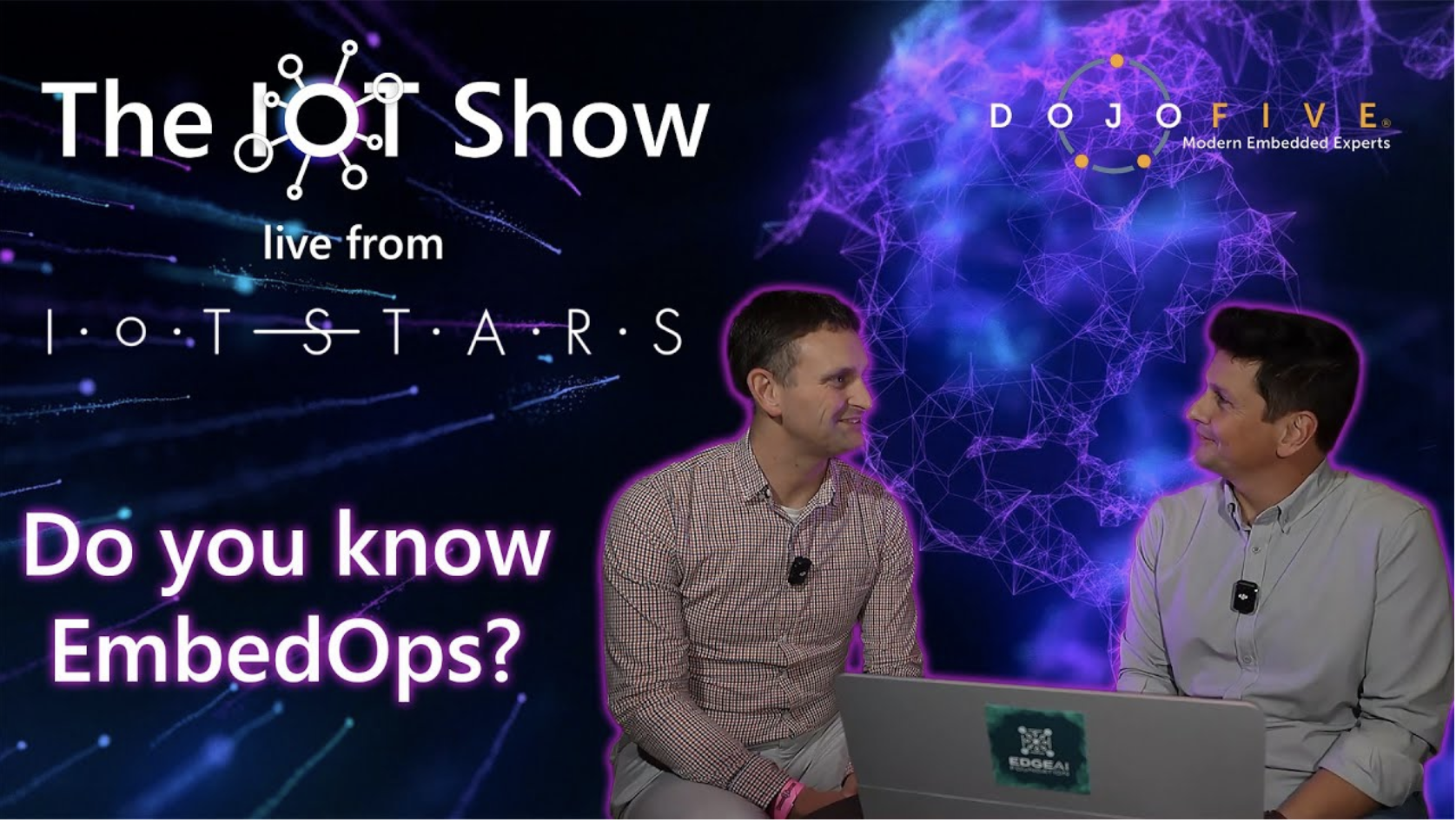
The world of software development has undergone massive shifts over the last two decades. We have seen the rise of DevOps, SecOps, and MLOps, which are methodologies that accelerate deployment in the web and mobile worlds. However, the embedded systems industry has been behind, often pushing towards the "build it from scratch" mentality.
At the recent IoT Stars event during Embedded World North America 2025 in Anaheim, Olivier Bloch in the live IoT Show stream sat down with Joe Schneider, CEO of Dojo Five, to discuss why it is finally time for the embedded world to have its own revolution: EmbedOps.
What is EmbedOps?
According to Schneider, EmbedOps is the necessary marriage of embedded engineering and DevOps culture. While web and mobile developers adopted CI/CD pipelines and automated testing 15 years ago to handle exploding complexity, embedded teams often remained stuck in linear, manual processes.
"Mobile and web really leapfrogged us in terms of dealing with the complexity of software," Schneider explained during the interview. Today, embedded devices aren't running on 5,000 lines of code anymore, they are running on millions. From Embedded Linux kernels to complex connectivity stacks (Wi-Fi, BLE, Cellular), the sheer volume of software on a modern device means that no single engineer can understand every line of code. To manage this, the industry must move away from the "bare metal" mindset and embrace higher layers of abstraction and automation.
The AI Factor: Tool vs. Feature
The conversation also highlighted the dual impact of Artificial Intelligence on the sector. On one hand, edge AI is redefining product requirements, demanding more powerful chips and frequent over-the-air (OTA) updates. On the other hand, Generative AI is transforming how that code is written.
"If you are a company that is not using AI to generate at least some parts of the code, you are falling behind,"
However, he offered a word of caution: unlike web servers with virtually unlimited resources, embedded devices are constrained by battery life and memory. AI-generated code must still be optimized to avoid "bloat", a classic embedded engineering discipline that remains relevant even as compute power becomes cheaper.
Bridging the Gap to Production
A refreshing takeaway from the discussion was the state of the talent pool. While there is a stereotype that embedded engineers are all "gray-haired experts," Schneider sees a vibrant new generation entering the field, often introduced via "gateway drugs" like Arduino.
However, there is a significant gap between making a prototype work on an Arduino and shipping a reliable, secure product at scale. This is where Dojo Five operates. Using their framework of the "10 Pillars of Modern Embedded," they help companies assess their maturity and implement the tools needed to bridge that gap, allowing junior teams to ship with the confidence of veterans.
Want to dive deeper?
You can watch the full interview from IoT Stars on The IoT Show channel.